Where Does the Word Checkmate Come From?
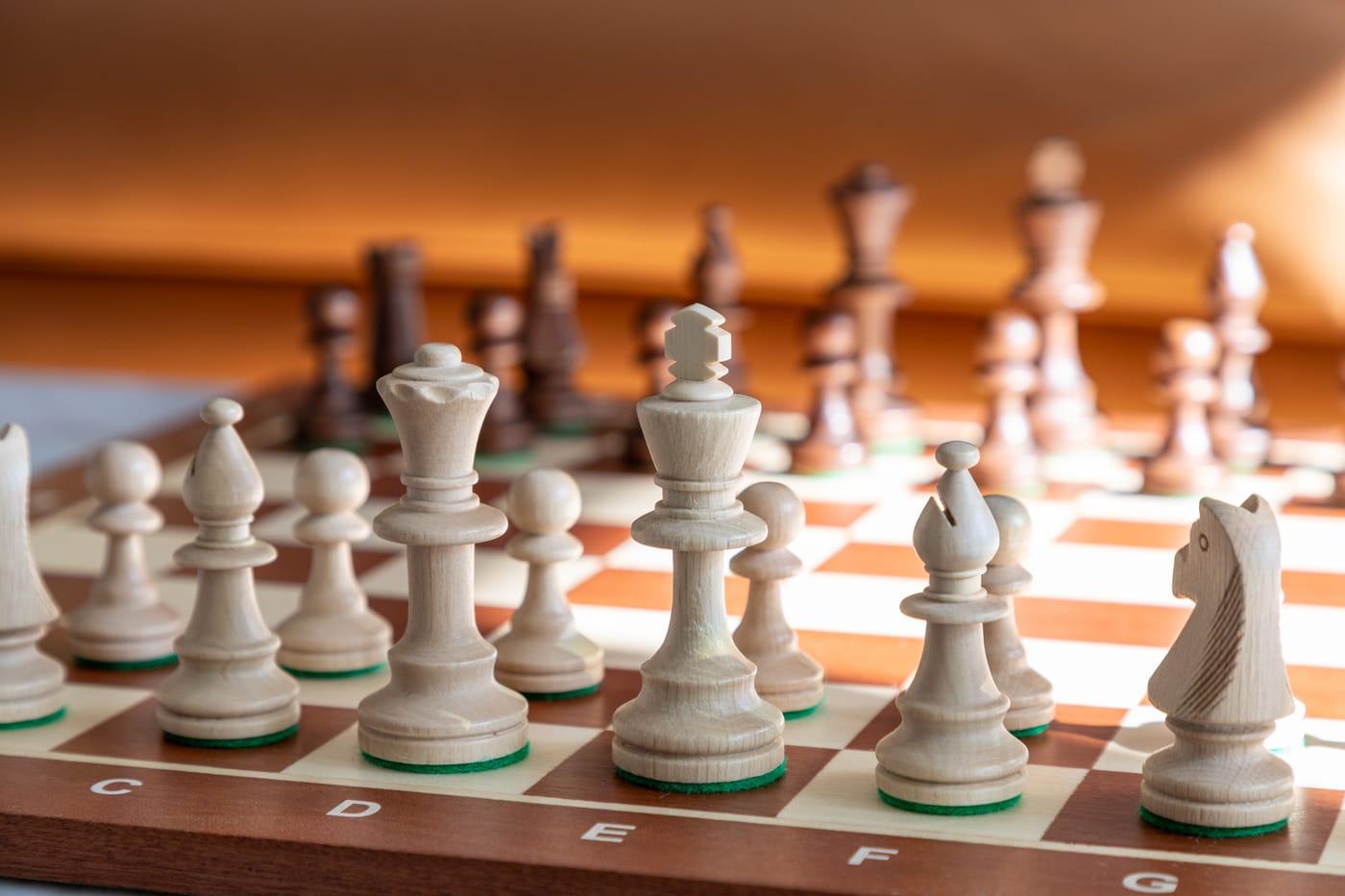
Where Does the Word Checkmate Come From?
Have you ever wondered where the word “checkmate” comes from? Every time a chess game ends, this word is spoken — but its origins go back more than a thousand years.
The Persian Origin: “Shāh Māt”
The word checkmate comes from the ancient Persian phrase “Shāh Māt” (شاه مات).
- Shāh means king
- Māt means helpless, defeated, or trapped
So, “Shāh Māt” literally means “the king is helpless” or “the king is defeated.”
This perfectly describes the final moment in a chess game — when the king has no legal moves left and cannot escape capture.
The Spread Through the Islamic World
As chess spread from Persia into the Islamic world around the 7th century, the term “Shāh Māt” remained widely used.
The game itself evolved, but many of its original terms were preserved, showing how influential Persian culture was in shaping early chess.
The Journey Into Europe
When chess entered Europe during the Middle Ages, the phrase began to change across different languages:
- Spanish: “jaque mate”
- Italian: “scacco matto”
- French: “échec et mat”
Each version still carried the same meaning — the king is defeated.
From “Échec et Mat” to “Checkmate”
The English word “checkmate” comes from the French “échec et mat.”
Over time, it was simplified and adapted into modern English, becoming the term we use today in chess.
Interestingly, the word “check” in chess also comes from “Shāh”, meaning the king is under attack.
From Persian to English
The phrase travelled with the game, and each language reshaped it:
| Language | Form | Note |
|---|---|---|
| Persian | shāh māt | "the king is dead" or "the king is helpless" |
| Arabic | al-shāh māta | the article and the verb are preserved |
| Medieval Latin | scacchi matto | the game term enters European texts |
| Old French | eschac mat | the form that reaches English |
| English | checkmate | "check" and "mate" become separate words |
The Persian shāh also gives English the word check: announcing that the king is under attack. Māt is the part that means the attack cannot be answered.
A note on the etymology
You will sometimes read that the phrase means "the king is dead" and sometimes that it means "the king is astonished" or "the king is helpless". The honest answer is that the exact nuance of māt in this context is debated by linguists. What is not debated is the structure: shāh (king) plus māt, used as a formula to announce that the king has no legal escape. The modern rule is stricter than the old phrase: a king is not "dead", it is checkmated when it is in check and has no legal move, no block, and no capture that removes the attacker.
Common misconceptions
- "Checkmate means the king is captured." The king is never captured in chess. The game ends the moment checkmate is delivered.
- "Stalemate and checkmate are the same." In stalemate the side to move has no legal move but is not in check. The result is a draw, not a win.
- "You must announce check." Modern rules do not require it. Announcing check is a courtesy, not an obligation, and in serious play it is usually omitted.
- "Mate is always a queen sacrifice." Most mates are ordinary: a back-rank rook, a smothered knight, or a king trapped by its own pawns.
How the word is used today
In notation, checkmate is written with # after the move. Older books sometimes use ++, and some use a dagger. In speech, players still say "checkmate" even when the game is resigned a move earlier, which is why the word survives outside the board as a metaphor for a decisive argument or a finished contest.
If you want to practise the pattern rather than the etymology, the puzzle trainer has mating nets sorted by difficulty, and the game analyser will show you the exact move where a game slipped from "winning" to "mate".
Conclusion
The word checkmate is more than just a way to end a game — it’s a piece of history.
From ancient Persia to modern chess tournaments, this single word has traveled across cultures and centuries, keeping its original meaning alive.
So the next time you say checkmate, remember: you’re echoing a phrase that has existed for over 1000 years. ♟️
Continue reading
Chess
Chessions Chess Puzzles Guide: How to Train Tactics, Climb Your Rating, and Reach the Leaderboard
Complete guide to the Chessions Chess Puzzles trainer: learn how adaptive Elo puzzle ratings, interactive Chess Coach feedback, hints, solutions, streaks, and the global 1200+ leaderboard work.
Chess
How to Create Chess Videos Fast Using Templates, Template Preview, and Simple Mode
Learn how to turn analyzed chess games into polished MP4 videos for TikTok, YouTube Shorts, and Instagram Reels using Chessions Video Templates, Template Preview with Main Move mapping, and Simple Editor Mode.
Chess
How to Import and Analyze Chess Games Online with Stockfish on Chessions
Learn how to import finished chess games from Chess.com, Lichess, or raw PGN and FEN on Chessions, then run free browser-based Stockfish analysis with accuracy scores and move classifications.